Railway robots are moving toward jobs that put people near live tracks, damaged equipment, and long stretches of remote infrastructure. The most useful systems will be judged by what they detect, how safely they stop, and whether their findings help a maintenance crew act.
- Track inspection is shifting toward repeated sensor checks rather than one-off visual surveys.
- Robotic arms can handle narrow, dirty, or hazardous repair tasks when a person stays out of the work zone.
- Autonomous operation still depends on clear safety rules, reliable position data, and human approval.
Inspection robots that find faults early
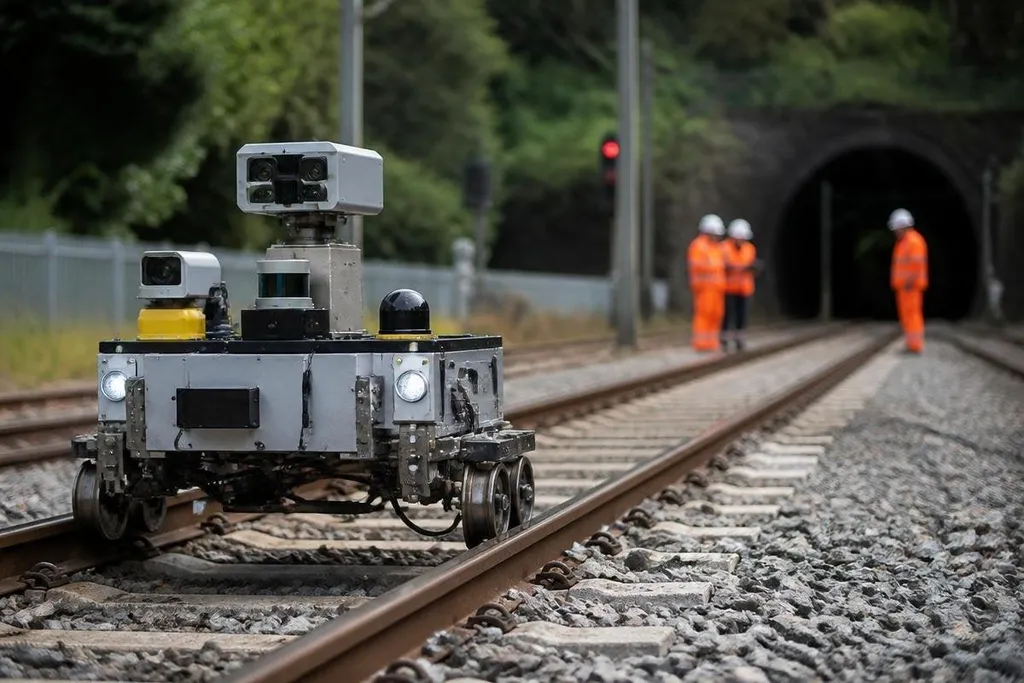
Track inspection is a strong fit for robots because the work repeats over the same physical path. A vehicle can carry cameras, LiDAR, thermal sensors, or ultrasonic equipment while it moves along rails, giving engineers more than a single view of the line.
LiDAR measures distance with laser pulses. It can map rail shape, nearby objects, and clearance around bridges or tunnels. Thermal cameras can point to hot bearings, brakes, or electrical parts, but a heat mark still needs a technician to check the cause.
The useful change is the link between sensing and maintenance records. A system that places a fault at a known track location gives the crew something they can find again. A clear image, sensor reading, and time stamp make that report easier to check than a vague note about a problem “near the next signal.”
Railway inspection claims need the machine, route, defect, and date in the same record. Coverage at Robot24.com can put those details beside the result before the next section turns to robots for rail, bridges, and tunnels.
Robots for rail, bridges, and tunnels
Some railway robots will spend less time moving along rails and more time working on structures beside them. A crawler could inspect bridge steel, tunnel walls, overhead equipment, or drainage channels where access takes time and may expose staff to falling material or live power.
The robot’s shape matters here. Magnetic wheels can hold to steel, tracked bases can cross rough ground, and a small arm can place a camera or sensor against a surface. Each design brings limits: magnets need suitable metal, tracks can damage delicate surfaces, and an arm can lose position when the base shifts.
Drones may cover large areas quickly, but they depend on flight rules, weather, battery limits, and a safe recovery point.
A ground robot may move more slowly while carrying heavier sensors. The right choice depends on the surface and the inspection task, not on the word “autonomous” in a product description.
Repair robots need more than a steady arm
Inspection creates a report. Repair changes the railway, so the safety case becomes harder.
A repair robot might clean a rail joint, remove loose material, apply a coating, or handle a component under remote control. For these tasks, force sensing matters. The robot needs to feel contact so it can stop when a tool meets unexpected resistance instead of pushing harder.
Remote operation can keep a technician away from the track, but it does not remove the need for skill. The operator still needs a live view, a reliable communications link, a clear emergency stop, and a way to confirm that the robot is where the system says it is.
The unproven part is long-term reliability. A railway robot must deal with rain, dust, vibration, poor lighting, metal glare, and changing track conditions. A clean test site says little about a machine that must work beside ballast, cables, signals, and passing trains.
Autonomy will arrive in small steps
Fully independent railway work needs more than obstacle detection. The system must know its position, read the track environment, follow a permitted route, and stop when conditions fall outside its limits.
That makes supervised autonomy the more likely near-term path. A robot can handle routine movement and sensor checks while a trained person approves the work area, reviews alerts, and takes control when the scene changes.
I'd watch the systems that publish failure cases, not the ones with the smoothest demo video. A stopped robot with a clear reason is safer than one that keeps moving because its software cannot describe the problem.
A buying checklist for railway teams
Before a pilot, check these points:
- Task boundary: name the exact inspection or repair job, including where the robot must stop.
- Sensor record: require raw images or readings, a time stamp, and a precise track location.
- Human control: test the emergency stop, remote link, and handover process away from the robot.
- Weather range: record the rain, dust, light, temperature, and vibration limits for the trial.
- Maintenance plan: ask who replaces batteries, wheels, cables, sensors, and damaged tools.
- Proof of value: compare crew time, fault checks, and repeat visits before and after the pilot.
The railway robots worth watching will earn wider use when operators can compare their results across seasons, routes, and failure reports. Until then, the best sign of progress is a verified maintenance task completed safely, with a record a human crew can trust.